
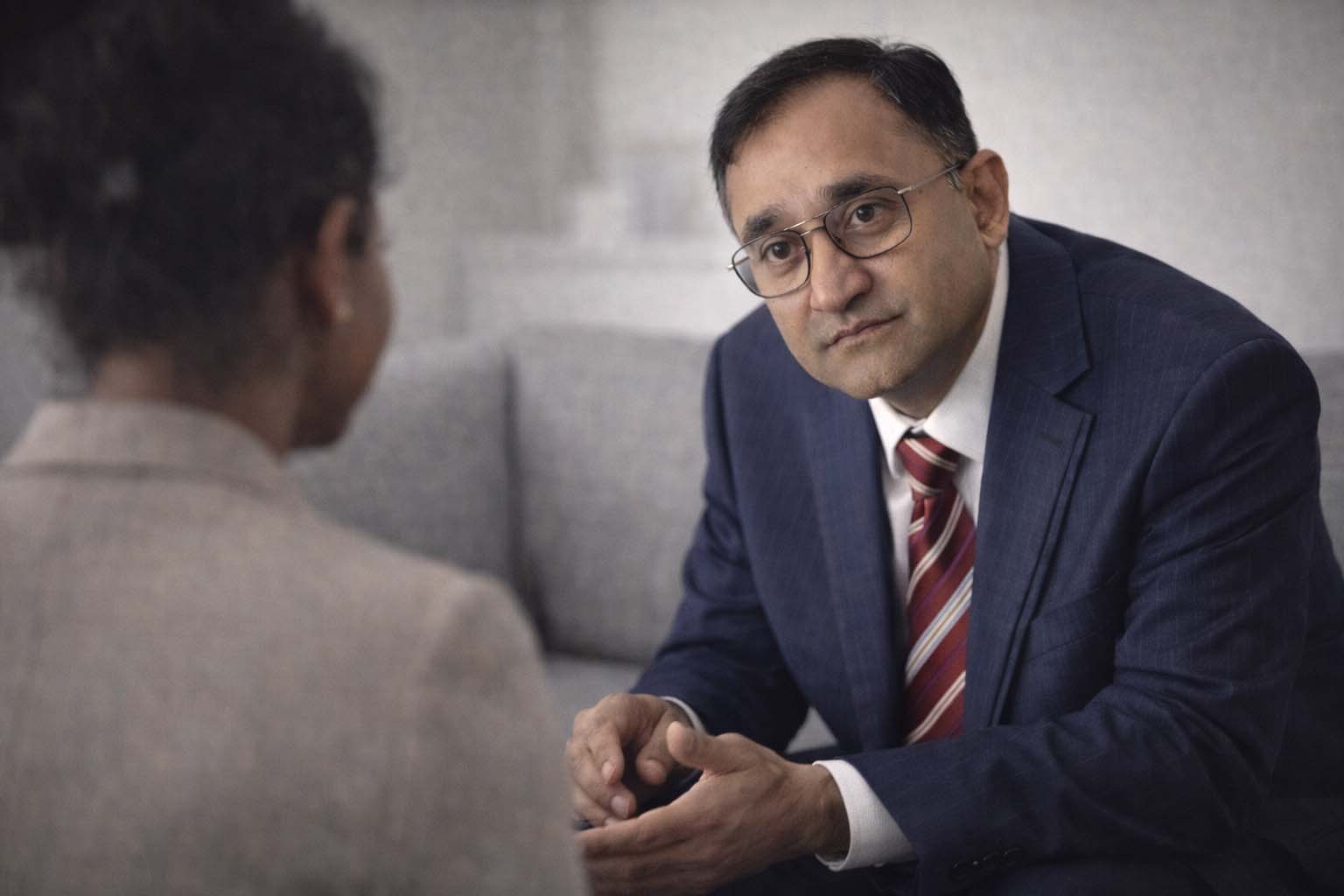
Independent Psychiatric Opinions for Personal Injury Claims
Civil litigation • Evidence-based • Court-aware
What this service provides
Independent psychiatric assessment for civil personal injury matters
This service provides independent psychiatric opinions in civil personal injury claims, including matters arising from workplace injury, motor vehicle accidents, public liability, and other alleged traumatic or stressful events.
Assessments are conducted for the purpose of assisting solicitors, insurers, and courts to understand the nature, cause, and impact of psychiatric injury in a structured and clinically grounded manner.
Who the service is for
Instructions accepted from all parties: Instructions are accepted from:
- Plaintiff solicitors
- Defendant solicitors
- Insurers and self-insured organisations
- Instructing legal teams acting jointly
The same clinical method and evidentiary standards apply regardless of the instructing party.
The role of the psychiatrist
Clinical expertise, not advocacy: The role of the psychiatrist in a personal injury claim is not to advocate for either side, but to:
- Conduct a comprehensive psychiatric assessment
- Review relevant collateral material
- Provide an opinion based on recognised diagnostic criteria and clinical reasoning
- Express conclusions on the balance of probabilities
Opinions are formed independently and are not influenced by the interests of the instructing party.
What this service is not
Not treatment • Not representation: This service does not involve:
- Ongoing treatment or therapeutic care
- Acting as an advocate for either party
- Providing opinions outside the limits of available evidence
Treating and medicolegal roles are kept clearly separate to preserve independence and clarity.
Guiding principles
Independence • Clarity • Proportionality: All opinions are guided by:
- Careful clinical assessment
- Transparent reasoning
- Clear distinction between history, findings, and opinion
- Explicit acknowledgement of uncertainty where it exists
The aim is to assist legal decision-making through clarity rather than persuasion.
The Questions an Independent Psychiatric Opinion Addresses
Common framework • Different forensic emphases
A shared clinical framework
One method, applied consistently
Regardless of who provides instructions, independent psychiatric opinions in personal injury matters are structured around a common set of clinical questions, including:
- Psychiatric diagnosis and formulation
- Temporal relationship between the alleged injury and symptoms
- Causation, contribution, and exacerbation
- Functional impact and work capacity
- Treatment needs and prognosis
These questions are addressed using the same clinical method and evidentiary standards in every matter.
What differs between plaintiff and defendant instructions is not the method, but the forensic emphasis.
Plaintiff solicitor focus
Establishing injury, impact, and consequence
When instructed by plaintiff solicitors, opinions commonly address questions such as:
- What psychiatric condition(s) are present following the alleged injury?
- Is there a clear temporal and clinical link between the incident and the onset of symptoms?
- Has the incident caused a new psychiatric condition, or materially exacerbated a pre-existing one?
- What is the nature and severity of functional impairment arising from the psychiatric condition?
- How has the injury affected capacity for work, daily functioning, and quality of life?
- What treatment is required, and what is the likely course with appropriate care?
The emphasis is on recognition of psychiatric injury, its impact, and its future implications.
Defendant solicitor focus
Testing causation, proportionality, and alternatives
When instructed by defendant or insurer solicitors, opinions commonly address questions such as:
- Is there evidence of a diagnosable psychiatric disorder?
- Are the reported symptoms consistent with recognised diagnostic criteria?
- What pre-existing psychiatric conditions, vulnerabilities, or psychosocial stressors were present?
- To what extent can the current presentation be explained independently of the alleged injury?
- Is the degree of reported impairment proportionate to clinical findings?
- Can responsibility for psychiatric impairment be apportioned between contributing factors?
The emphasis is on causation, contribution, proportionality, and alternative explanations.
A note on balance
Addressing the full clinical picture
In practice, a well-constructed psychiatric opinion will usually address both sets of considerations, regardless of the source of instructions.
Where evidence supports one position over another, this is stated clearly.
Where uncertainty exists, it is identified and explained.
This approach assists parties and courts by clarifying:
- What can be supported on the balance of probabilities
- What remains contested or indeterminate
- Why those conclusions have been reached
How this assists legal decision-making
Clarity without advocacy
By addressing the questions most relevant to both plaintiff and defendant perspectives within a single, consistent framework, the opinion aims to:
- Reduce ambiguity
- Narrow areas of dispute
- Support informed resolution, whether by negotiation or adjudication
The objective is not to advance a case, but to illuminate the issues that matter.
Independence and Neutrality
Method-led • Evidence-based • Court-focused
An independent expert role – Assisting the court, not the case
In personal injury matters, the role of the psychiatrist is to provide an independent expert opinion. The primary obligation is to the court or decision-maker, rather than to the instructing party. Opinions are formed and expressed without advocacy, and are not tailored to advance the position of either plaintiff or defendant.
Consistent standards, regardless of instruction
One approach for all parties – The same clinical standards and evaluative framework are applied whether instructions are received from:
- Plaintiff solicitors
- Defendant solicitors
- Insurers or self-insured entities
The source of instructions does not alter the assessment process, the interpretation of evidence, or the conclusions reached.
How opinions are formed
Transparent clinical reasoning
Independent psychiatric opinions are based on:
- A comprehensive clinical interview
- Review of relevant medical, occupational, and legal material
- Application of recognised diagnostic criteria
- Integration of history, examination findings, and collateral information
Where evidence is limited, inconsistent, or equivocal, this is stated explicitly.
Expressing uncertainty
Clarity about limits
Psychiatric opinion in medicolegal contexts often involves areas of uncertainty. Where this arises:
- The limits of the available evidence are identified
- Alternative explanations are considered
- Conclusions are expressed on the balance of probabilities
Overstatement is avoided. Precision is preferred to certainty.
Professional and ethical boundaries
Separation of roles
To preserve independence:
- Treating and medicolegal roles are kept separate
- The assessment is confined to matters relevant to the legal question
- Opinions are based on clinical evidence, not assumptions about legal outcome
This separation supports fairness to all parties and strengthens the reliability of the opinion.
The aim of neutrality
Clarity, not compromise
Neutrality does not mean avoiding conclusions.
It means reaching conclusions through method, evidence, and reasoning, rather than alignment with any party’s interests.
The objective is to assist legal processes by providing clear, reasoned psychiatric opinion that withstands scrutiny.
What Solicitors Can Expect
Clear process • Predictable timelines • Structured opinions
1. Referral and instructions
A straightforward process
Instructions are typically provided in writing and may include:
- A letter of instruction outlining the legal questions to be addressed
- Relevant medical records, reports, and correspondence
- Employment, occupational, or functional material where relevant
- Any specific jurisdictional or procedural requirements
Clear instructions assist in ensuring that opinions directly address the matters in issue.
2. The assessment
Comprehensive and focused
The psychiatric assessment involves:
- A detailed clinical interview
- Review of collateral material provided
- Consideration of psychosocial, occupational, and medical factors
Assessments are conducted in a professional, respectful manner, with attention to the legal context of the evaluation.
3. Report structure
Clear, court-aware, and usable
Reports are structured to support legal decision-making and typically include:
- Background and referral context
- Summary of material reviewed
- Psychiatric history and mental state examination
- Diagnostic formulation
- Opinion on causation, contribution, and functional impact
- Treatment recommendations and prognosis
- Clear responses to the questions posed
Reasoning is explicit, and distinctions between history, findings, and opinion are maintained throughout.
4. Timeframes
Reliable and transparent
Indicative timeframes are discussed at the time of instruction and generally include:
- Scheduling of assessment
- Preparation and delivery of the written report
If delays or complexities arise, these are communicated promptly.
5. Clarification and supplementary opinions
Responsive where needed
Where appropriate:
- Clarification of opinions can be provided
- Supplementary reports may be prepared in response to additional material or specific queries
- Further explanation can be offered to assist understanding of clinical reasoning
This is undertaken in a manner consistent with maintaining independence.
6. Notes on different instructions
Process remains the same
While the clinical method does not change:
- Plaintiff matters often involve greater emphasis on functional impact and future treatment needs
- Defendant or insurer matters often involve greater emphasis on pre-existing factors, contribution, and proportionality
These differences are addressed within a single, consistent framework.
7. Professional reliability
Consistency you can plan around
The service is designed to be:
- Organised and predictable
- Responsive to reasonable requests
- Aligned with the expectations of civil litigation processes
The aim is to make the psychiatric component of a matter clearer rather than more complex.
A Note for Individuals Attending an Assessment
Fairness and Kindness
What to expect What the assessment is for
Why this assessment is taking place
Understanding your experience
If you have been asked to attend a psychiatric assessment as part of a personal injury claim, this is for the purpose of providing an independent medical opinion to assist the legal process. The assessment is not treatment, and it is not a test of character or credibility. Its aim is to understand your experiences, symptoms, and how the alleged injury has affected you.
What happens during the assessment
A professional clinical interview
The assessment usually involves:
- Talking through your history and current concerns
- Discussing the events relevant to the claim
- Exploring how symptoms have affected daily life and work
- Reviewing relevant medical or other background information
You will be given the opportunity to explain matters in your own words.
How the information is used
Independence and confidentiality
The information gathered is used to form an independent psychiatric opinion, which is provided to the instructing legal team.
The psychiatrist does not decide the outcome of the claim.
Their role is to provide clinical opinion to assist others in making legal decisions.
Respect and professionalism
Conducted with care
Assessments are conducted respectfully and professionally.
It is recognised that discussing personal experiences can be difficult, and care is taken to approach this thoughtfully.
If you have questions about the process itself, these can be raised at the time of assessment.
A clear boundary
Not ongoing care
As this is a medicolegal assessment, ongoing treatment or follow-up care is not provided as part of this process. If treatment is required, this will usually be discussed with your treating practitioner.